


Introduction
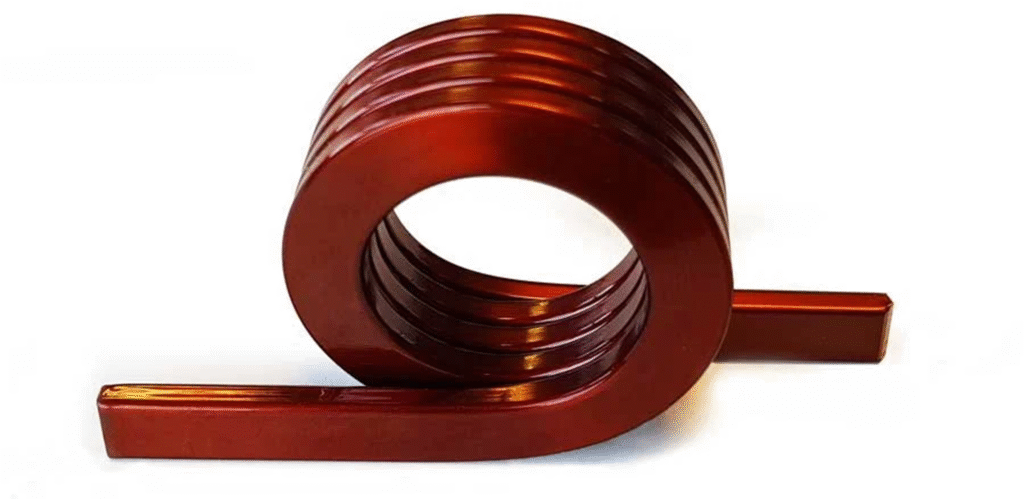
A flat wire inductor is a type of power inductor that uses flat copper wire instead of traditional round wire for winding. This design significantly improves current carrying capability, thermal performance and electrical efficiency. Flat wire inductors are widely used in modern electronic systems where high current, high efficiency and compact size are required.
With the rapid development of power electronics, electric vehicles, renewable energy systems and high-frequency power supplies, flat wire inductors have become an important component in many advanced applications.
What Is a Flat Wire Inductor
A flat wire inductor, sometimes called a flat copper wire inductor or foil inductor, is an inductive component made by winding flat copper conductors around a magnetic core.
Compared with conventional round wire inductors, the flat wire structure provides:
- Larger conductor surface area
- Lower resistance
- Better heat dissipation
- Higher current capacity
This makes flat wire inductors particularly suitable for high-power and high-current circuits.
Key Advantages of Flat Wire Inductors
1 Higher Current Capacity
The flat copper conductor has a larger cross-sectional area than round wire. This allows the inductor to handle higher current without excessive heating.
2 Lower DC Resistance (DCR)
Flat wire reduces DC resistance, which leads to:
- Lower power loss
- Higher efficiency
- Better thermal performance
This is critical for power conversion applications.
3 Improved Heat Dissipation
Because the flat conductor exposes more surface area, heat can be dissipated more efficiently. This helps maintain stable performance in high-power systems.
4 Better Mechanical Stability
Flat wire windings are tightly packed and more structurally stable, making them ideal for industrial electronics and automotive environments.
Applications of Flat Wire Inductors
Flat wire inductors are widely used in many modern electronic systems, including:
Power Supplies
Flat wire inductors are commonly used in switching power supplies, DC-DC converters and voltage regulators where high efficiency is essential.
Electric Vehicles (EV)
Electric vehicles require high-current inductive components for power management systems such as:
- On-board chargers
- DC-DC converters
- Battery management systems
Renewable Energy Systems
Flat wire inductors are also widely used in:
- Solar inverters
- Energy storage systems
- Wind power equipment
Industrial Electronics
Industrial control systems, automation equipment and high-power electronic devices often rely on high-current inductors for stable operation.
Flat Wire Inductor vs Round Wire Inductor
| Feature | Flat Wire Inductor | Round Wire Inductor |
|---|---|---|
| Current capacity | Higher | Lower |
| DC resistance | Lower | Higher |
| Heat dissipation | Better | Moderate |
| Power efficiency | Higher | Lower |
| Application | High current systems | General electronics |
Because of these advantages, flat wire inductors are increasingly replacing traditional round wire inductors in high-performance power electronics.
Design Considerations
When selecting or designing a flat wire inductor, several factors should be considered:
- Inductance value
- Current rating
- Core material
- Operating frequency
- Thermal performance
Choosing the right inductor ensures stable circuit performance and long service life.
Conclusion
Flat wire inductors play a critical role in modern power electronics due to their high current capability, low resistance and superior thermal performance. As industries continue to demand higher efficiency and compact designs, flat wire inductors will remain an essential component in applications such as electric vehicles, renewable energy systems, power supplies and industrial electronics.
Manufacturers today also offer custom flat wire inductors designed to meet specific requirements for different electronic systems.
Hi, this is a comment.
To get started with moderating, editing, and deleting comments, please visit the Comments screen in the dashboard.
Commenter avatars come from Gravatar.